
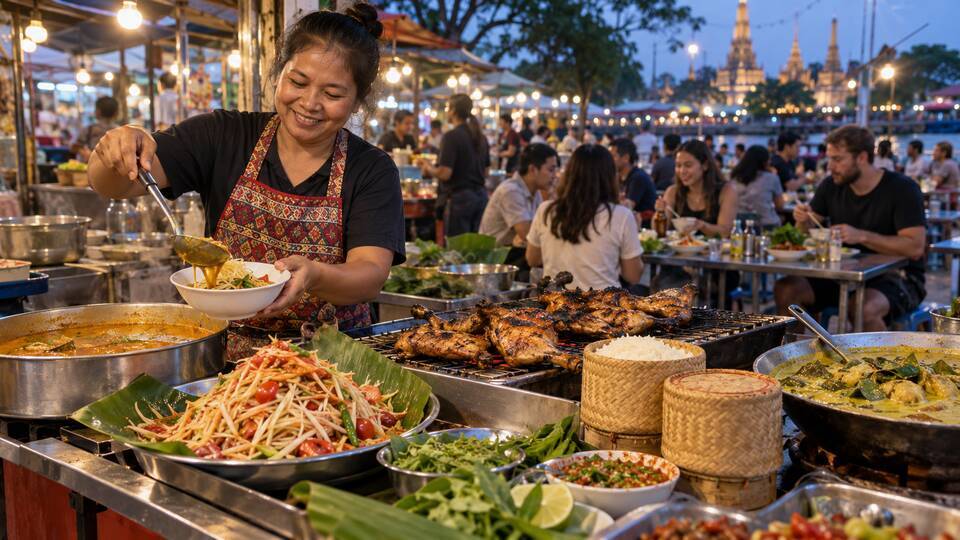
Spend enough time eating in Thailand and one lesson becomes obvious: “Thai food” is not one tidy menu. The dishes change as you move from the northern mountains to the Isan plateau, through the central plains, and down to the coasts of the South. Ingredients, heat, herbs, and even the way food is shared can feel different from one province to the next.
That is good news for visitors and expats. You do not need an expensive tasting menu to understand the country. A morning market, a busy noodle shop, and a family-run evening restaurant can tell you plenty—if you know what to order and how to read the room.
Start With the Regional Map, Not a List of “Best” Dishes
The Tourism Authority of Thailand’s Thai Foodie Map highlights local food across less-visited provinces such as Sukhothai, Nakhon Phanom, Surin, Chumphon, and Satun. That is the right way to think about eating here. Instead of chasing one famous restaurant, ask what the province is known for and try several versions.
Menus written for tourists often gather green curry, pad Thai, tom yum, and mango sticky rice in one place. Those dishes can be excellent, but they do not explain why eating in Chiang Mai feels different from eating in Ubon Ratchathani or Nakhon Si Thammarat. Regional specialties make a trip memorable because the food belongs to the landscape and the people around you.
Northern Thailand: Milder Heat, Deep Aromas, and Sticky Rice
Chiang Mai is the easiest introduction to northern food. Khao soi—egg noodles in a rich curry broth, usually topped with crisp noodles—is the famous starting point. Add pickled mustard greens, shallots, and lime a little at a time rather than dumping everything into the bowl before tasting it.
Look for sai ua, the coiled northern sausage scented with herbs and spices; nam prik ong, a tomato-and-pork chili dip; and nam prik noom, a roasted green-chili dip commonly eaten with vegetables and pork crackling. Northern larb can be quite different from the lime-bright Isan version and may use a dry spice mixture with an earthy flavor.
For a relaxed meal, order several dishes with sticky rice and share them. Chiang Mai has polished restaurants, but market stalls and simple shops often provide the more revealing meal. The official TAT page for Chiang Mai also points visitors toward walking streets and local handicrafts, making dinner easy to combine with an evening market.
Isan: Grilled Meat, Sharp Salads, and Food Made for Sharing
Northeastern food is widely available throughout Thailand, partly because so many Isan cooks and families have moved around the country. A classic table might include som tam, grilled chicken, sticky rice, larb, and a basket of raw vegetables. The combination is more important than any single dish.
Som tam is prepared to order, which means you can request the heat and sweetness you prefer. “Mai phet” means not spicy, although the cook’s idea of mild may still be lively. “Phet nit noi” asks for a little heat. If you have allergies or strict dietary needs, use a translated written note; simply pointing at a dish is not enough because fish sauce, shrimp paste, peanuts, or stock may not be visible.
There are many papaya-salad styles. Som tam Thai is usually sweeter and often includes peanuts. Som tam pu pla ra has fermented fish seasoning and crab and tastes much stronger. Neither is the “real” version at the expense of the other—they are different dishes for different preferences. Start gently, then explore.
Central Thailand: The Broadest Mix of Everyday Favorites
Bangkok and the central region bring together influences from across the country, but they also have their own balance of sweet, sour, salty, and spicy flavors. Boat noodles, pad kra pao, tom yum, green curry, and various rice-and-curry shops are reliable entry points.
At a khao gaeng shop, cooked curries and stir-fries sit in trays, and you choose one or more to go over rice. These shops are excellent for seeing the food before ordering. They are usually busiest around breakfast and lunch; high turnover is useful when you want freshly prepared food.
Do not overlook noodles. A noodle stall may offer a choice of thin rice noodles, wide noodles, egg noodles, or glass noodles, followed by dry or soup preparation. Watch one order before stepping forward. You can often point to the noodle type and choose pork, beef, chicken, fish balls, or another topping without needing a long Thai sentence.
Southern Thailand: Turmeric, Seafood, and Serious Heat
Southern cooking can be fiery and intensely seasoned. Kua kling is a dry curry stir-fry often made with minced meat. Gaeng som in the South is a sharp, spicy curry that differs from the sweeter central version. Sataw, sometimes called stink bean, appears with shrimp or meat and has a flavor that people either chase or avoid.
Coastal provinces naturally feature seafood, but freshness and pricing matter. At restaurants selling fish by weight, confirm the price per 100 grams or per kilogram before ordering, ask to see the fish, and request the total weight. This is ordinary good practice, not an accusation. Clear ordering prevents an awkward bill later.
In Muslim communities, especially in parts of the deep South and on the Andaman side, look for roti, biryani-style rice, grilled meats, and curries with Indian and Malay influences. Halal signs are common, but travelers with strict requirements should still ask.
How to Choose a Good Place Without Depending on Reviews
Online ratings help, but they often reward photogenic settings, English menus, and convenient locations. On the ground, a few simple signals are more useful:
- Choose a place busy with local customers at the normal meal hour.
- Look for ingredients protected from dust, insects, and direct sun.
- Prefer cooked food served hot and made with visible turnover.
- Check whether raw and cooked ingredients are handled separately.
- For seafood, choose a shop that keeps products properly chilled.
Street food is not automatically unsafe, and a polished dining room is not automatically safe. Use the same judgment you would use anywhere: cleanliness, temperature, turnover, and careful handling matter more than the price of the chair.
Order the Thai Way: Several Dishes, One Balanced Table
Many newcomers order one curry each and wonder why the meal feels too spicy or rich. Thai group meals are usually balanced across the table. Pair a spicy salad or curry with a mild omelet, grilled meat, vegetables, soup, and rice. Share rather than treating every plate as an individual entrée.
Taste before adding the four-table-condiment set. Sugar, fish sauce, vinegar with chilies, and dried chili are usually there for noodle dishes, not instructions to alter everything. A cook has already balanced most curries and stir-fries.
Carry small notes for allergies and learn a few useful phrases. “Ao an nee” means “I’ll take this one.” “Mai sai…” means “do not add…” followed by the ingredient. “Check bin” asks for the bill. A friendly tone and patience work better than perfect pronunciation delivered with frustration.
The Best Food Trip Leaves Room for Surprises
Plan one or two target dishes in each destination, then leave space for what looks busy and smells good. Try breakfast where residents eat before work. Visit a fresh market in the morning and a walking street in the evening. Ask your hotel staff, neighbor, or taxi driver what they personally eat nearby—not what tourists usually request.
Thailand rewards repeat meals. The first bowl teaches you the basic flavor; the third helps you notice how each cook changes it. Eat region by region, order with curiosity, and avoid turning the search for the “best” dish into a race. The real pleasure is discovering how many different versions of Thailand can fit on one table.