
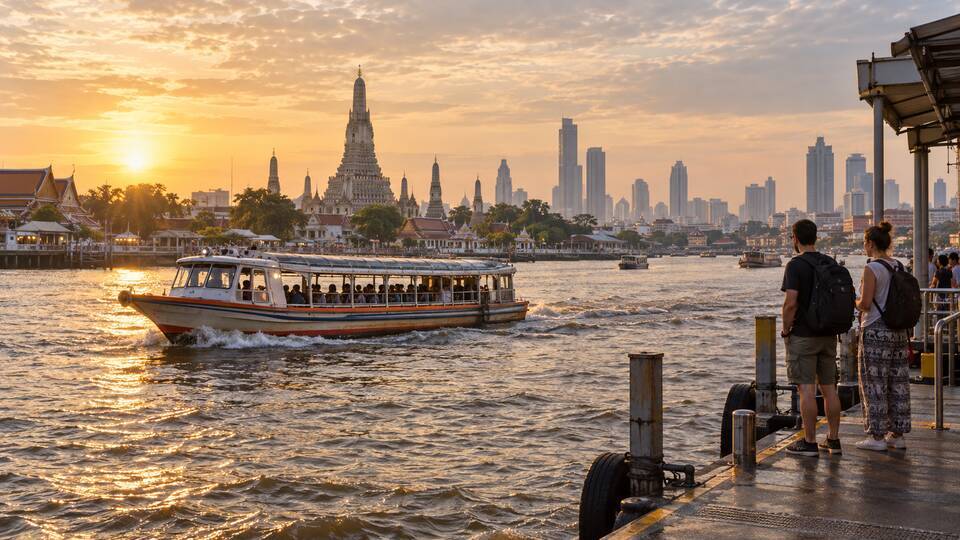
Bangkok is much easier when you stop trying to “finish” it. The city is too large, too layered, and too changeable for a checklist. A good first visit mixes old Bangkok, neighborhood food, a serious market, river time, and one evening out—without spending half the day trapped in traffic between attractions on opposite sides of town.
This three-day plan works for tourists, but it also suits new expats who have been commuting between home, work, and a shopping mall without really seeing the city. Treat it as a framework. Opening hours, admission rules, and transit services can change, so verify them on the day you go.
Before Day One: Organize Bangkok by Transport
Think in corridors. The Chao Phraya River connects the historic district with several modern stops. BTS and MRT rail lines handle many central neighborhoods. Taxis and ride-hailing are useful for the final stretch, but road travel can be slow at peak times or in heavy rain.
Save destinations in Thai as well as English. Some names have several spellings, and a driver may know the Thai name but not the English version. Carry small cash for markets, local boats, and food stalls, while keeping cards for hotels, malls, and larger restaurants. Do not keep your only bank card and all your cash in the same wallet.
Day One: Temples, Old Bangkok, and the River
Morning: Start before the heat builds
Begin in the historic district with the Grand Palace and Wat Phra Kaew, then walk or take a short ride to Wat Pho. Dress for religious sites: shoulders and knees covered, shoes easy to remove, and nothing so thin or loose that it becomes a problem in wind or rain. Ignore anyone outside who says a major attraction is closed and immediately offers a “special” alternative. Check at the official entrance.
The Tourism Authority of Thailand lists Wat Phra Kaew, Wat Pho, Wat Arun, Golden Mountain, and Wat Ratchanadda among Bangkok’s major historical and religious attractions in its official Bangkok guide. You do not need all of them in one day. Two well-paced temples teach you more than five hurried photo stops.
Lunch: Eat near the old city
Choose a busy shophouse or market area and order a straightforward lunch: noodles, rice with roast duck, chicken rice, or a curry-and-rice plate. Restaurants beside headline attractions may charge more, but higher price alone is not a scam. Read the menu, confirm seafood sold by weight, and decide before sitting down.
Afternoon: Cross the river
Use the river to change the pace. A cross-river ferry or regular passenger boat provides a view of the city that a taxi cannot. Wat Arun is the obvious stop, but simply moving along the Chao Phraya shows how old communities, luxury hotels, warehouses, condos, temples, and schools occupy the same waterway.
Avoid boarding an unmarked private boat after a vague sales pitch. Use an official pier, ask the fare and route, and confirm whether the price is per person or for the whole boat. If you want a private long-tail trip, agree on duration, stops, and total price before leaving.
Evening: Chinatown after dark
Yaowarat is lively, crowded, and best approached as a walking dinner rather than one huge meal. Share small portions so you can try noodles, grilled seafood, dumplings, desserts, and fruit. Popular stalls develop queues; a long line is not always proof of greatness, but it does indicate turnover.
Keep your phone and wallet secured in dense crowds. Cross streets carefully—motorcycles may appear from directions you are not watching. When you have had enough, leave before fatigue turns every decision into a bad one.
Day Two: Markets, Green Space, and Modern Bangkok
Morning: Choose the right market
If it is the weekend, Chatuchak is the classic choice. TAT describes a huge range of clothing, bags, handicrafts, decorations, souvenirs, food, and more at Chatuchak Weekend Market. Arrive early, photograph a map, and agree on a meeting point if traveling with others. The market becomes much harder to navigate once everyone is hot and tired.
On a non-weekend day, choose a neighborhood market, Sampeng for wholesale-style shopping, or a morning fresh market. Markets are working commercial spaces, not theme parks. Ask before photographing vendors closely, avoid blocking narrow aisles, and do not handle food unless invited.
Afternoon: Cool down instead of pushing through
Bangkok heat can drain a visitor who planned by distance rather than temperature. Take a midday break in a park, museum, cafe, or mall. This is not wasted travel time. A two-hour reset often produces a better evening than forcing another outdoor attraction at 2 p.m.
Modern malls are part of Bangkok life, not merely shelters with air-conditioning. They provide restaurants at many price levels, cinemas, supermarkets, banks, and clean places to regroup. Visit one near your next stop rather than crossing town for a specific mall unless shopping is the main event.
Evening: Pick one nightlife style
Bangkok nightlife includes rooftop views, live music, craft cocktails, neighborhood bars, night markets, jazz, clubs, and casual beer gardens. Choose the experience that fits you rather than following a generic “top ten” list. Check dress rules and prices before committing to a rooftop venue.
For alcohol, transport, and personal safety, keep the plan simple: do not drive, do not leave a drink unattended, and do not hand your passport to a bar or entertainment venue. Carry a copy or secure digital image for routine identification while keeping the original safely stored when legally appropriate.
Day Three: A Neighborhood and a Flexible Finish
Morning: See where people actually live
Choose one neighborhood outside the main tourist loop. Thonburi offers canals, local food, and older residential areas. Ari has cafes and restaurants along quieter lanes. Talat Noi mixes shrines, workshops, street art, and old commercial buildings. On Nut and Udom Suk show a more everyday east-Bangkok rhythm.
Walk slowly and remember that photogenic alleys are still people’s homes. Keep voices down, do not enter private property for a picture, and move aside for deliveries and motorcycles.
Lunch: Give one meal more attention
After two days of grazing, reserve time for a proper Thai lunch. It does not have to be expensive. Order a balanced table with a salad, curry or soup, vegetable dish, grilled or fried protein, and rice. Ask staff which dishes work together. This often produces a better meal than ordering five famous spicy dishes that compete with one another.
Afternoon and evening: Keep a weather option
Use the final hours for what the trip has been missing: a museum, massage at a reputable shop, cooking class, park, river sunset, another market, or a return to the neighborhood you liked most. Bangkok’s weather can change quickly, especially in the wet season, so keep one indoor and one outdoor option.
Small Habits That Improve All Three Days
- Group stops by neighborhood instead of ranking them by fame.
- Check map distance and realistic travel time before leaving.
- Carry water, sun protection, and a light rain layer.
- Use official ticket windows and clearly marked transport services.
- Build in one unscheduled hour every day.
- Save the Tourist Police hotline, 1155, before you need it.
The best Bangkok visit is not the one with the most checkmarks. It is the one where you have enough energy to notice the smell of grilled pork in a morning lane, the change in light on the river, and the way a neighborhood shifts after work. Give the city structure, but leave it room to surprise you.