
Thailand is often sold as one easy package: Bangkok, a temple, an elephant, and a beach. In practice, a trip to Chiang Mai, an island week in Krabi, and a slow weekend in an Isan riverside town feel like three different countries. The best destination depends less on an online ranking and more on your season, energy level, transport tolerance, and idea of fun.
Long-term residents learn to plan around weather and distance rather than trying to collect every famous province. One well-chosen region is usually more enjoyable than an itinerary that changes hotels every night.
First, Understand the Seasons—Then Check the Forecast
The Thai Meteorological Department generally divides the country into a hot season from around mid-February to mid-May, a rainy season from around mid-May to mid-October, and a cooler season from around mid-October to mid-February. Those are national guidelines, not promises. The department notes that timing can vary and that the South follows different rainfall patterns from upper Thailand.
The east coast and west coast of the southern peninsula do not share identical monsoons. A beach recommendation for Phuket cannot automatically be applied to Koh Samui. Sea conditions can cancel boats, and some marine parks close seasonally for safety and conservation. TAT’s Krabi information, for example, notes heavier west-coast rain associated with the Indian Ocean monsoon. Check the Thai Meteorological Department, park announcements, and local boat operators shortly before travel.
Choose Bangkok for Variety and Short Attention Spans
Bangkok suits travelers who want food, nightlife, museums, temples, shopping, and easy changes of plan. You can spend the morning in the historic district, eat lunch in a shophouse, take rail transit to a modern mall, and finish at a rooftop or neighborhood bar.
The tradeoff is scale. Bangkok can be exhausting if every day requires crossing the city. Stay near the places that matter most to you and organize days by neighborhood or transport line. It is an excellent first and final stop because the city gives you alternatives when weather disrupts an outdoor plan.
Best for: first-time visitors, food-focused weekends, shoppers, nightlife, and travelers who want strong transport and accommodation choices.
Choose the North for Mountains, Food, and a Slower Pace
Chiang Mai combines temples, markets, cafes, cooking classes, craft communities, and access to mountains. TAT highlights the city’s walking streets and handmade products, while the surrounding province offers scenic drives and national parks. Chiang Rai feels smaller and provides a different temple-and-landscape circuit; Mae Hong Son rewards people willing to accept winding roads and slower travel.
The cooler months are popular for good reason, but book accommodation ahead during festivals and major Thai holidays. The North can experience serious smoke and fine-particle pollution during parts of the dry-season burning period. Conditions vary by day and year, so check official air-quality reporting rather than assuming a fixed “safe month.” People with respiratory or heart concerns should take poor readings seriously and adjust plans.
Best for: mountain scenery, regional food, markets, motorbike loops for properly licensed and experienced riders, and travelers who prefer evenings that are calmer than Bangkok or Pattaya.
Choose the Andaman Coast for Dramatic Scenery
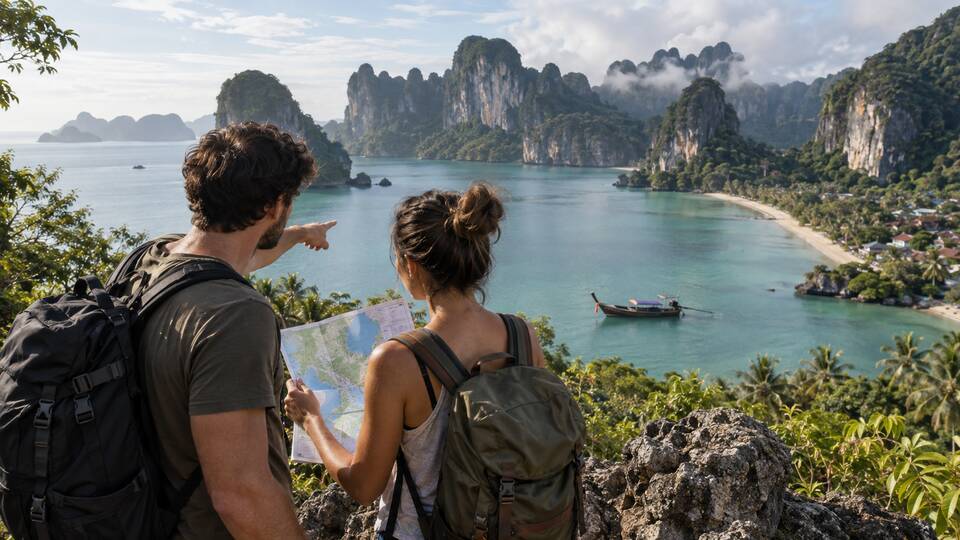
Phuket has the broadest range of resorts, restaurants, nightlife, services, and flights on the Andaman side. It is convenient but can feel commercial in its busiest zones. Krabi gives access to limestone scenery, Railay, island trips, and a more compact base around Ao Nang. Khao Lak is quieter and often chosen for beach time and dive connections.
Do not plan every day around a speedboat. Weather can make the sea rough even when it is not raining at your hotel. Keep a land day available, use licensed operators, wear the life jacket provided, and accept a cancellation when crews say conditions are unsafe.
Best for: limestone landscapes, island hopping, diving seasons, resort choices, and groups that want both beaches and organized activities.
Choose the Gulf for Different Island Personalities
Koh Samui is the most developed of the well-known Gulf islands, with an airport, broad accommodation range, beach clubs, family resorts, and hospitals. Koh Phangan is famous for full-moon events but also has quiet beaches, wellness stays, and long-term communities away from party nights. Koh Tao is closely associated with diving and has a smaller-island feel.
Island choice should include transport and medical needs. A beautiful remote beach may require a steep road, boat transfer, or long trip to major care. Check ferry connections before buying separate flights or nonrefundable rooms. During popular parties, reserve legitimate transportation rather than improvising late at night.
Best for: travelers who want an island base rather than daily sightseeing, with choices ranging from nightlife to diving and quiet retreats.
Choose Ancient Cities for History Without a Long Expedition
Ayutthaya is close enough to Bangkok for a day trip, though an overnight stay gives you cooler mornings and evenings after day-trippers leave. The historical park spreads across multiple sites, so a bicycle, tuk-tuk hired on clear terms, or private vehicle can save energy. Sukhothai requires more travel but offers a calmer historical-park experience and distinct local food.
Kanchanaburi combines twentieth-century history, river scenery, and access to waterfalls and national parks. It is tempting to treat it as a quick photo stop, but the museums and memorial sites deserve time and respectful behavior.
Best for: cultural travel, photography, families who need flexible days, and Bangkok residents looking for manageable short breaks.
Choose Isan for Food, Festivals, and Everyday Thailand
The Northeast receives fewer international visitors than Bangkok, Chiang Mai, or the islands, yet it is one of the best regions for people who want strong local food and cities built around Thai daily life. Khon Kaen and Udon Thani are easy urban bases. Nakhon Phanom looks across the Mekong toward Laos. Ubon Ratchathani connects to temples, river landscapes, and seasonal festivals.
English may be less widely used outside major hotels and attractions, and public transportation between rural sites can require planning. That is part of the appeal for some travelers and a frustration for others. Rent a car only if licensed, insured, and comfortable driving locally; otherwise arrange a driver for remote days.
Best for: repeat visitors, regional food, road trips, Mekong scenery, and expats who want to see life beyond established foreign enclaves.
Match the Destination to the Traveler
- Three or four days: stay in one city or one island; do not spend half the trip transferring.
- Young children: prioritize simple transport, shade, pool safety, and access to medical care.
- Nightlife: choose the exact neighborhood, not merely the province.
- Food: pick a region and explore markets plus everyday restaurants.
- Nature: verify seasonal park access and weather before booking.
- Remote work: confirm the specific property’s internet, power reliability, and workspace.
A Better Way to Build the Itinerary
For a two-week first trip, two or three bases are enough: perhaps Bangkok, the North, and one beach region. Add travel days honestly. A one-hour flight can consume most of a day after packing, airport transfers, check-in, waiting, and reaching the next hotel.
For residents, schedule shorter regional trips across the year instead of saving everything for one exhausting holiday. Visit the same place in another season and it may feel entirely new.
Thailand’s “top destination” is the place that matches the conditions when you are actually traveling. Choose for weather, pace, and interests; keep one flexible day; and let the region show you more than its most famous photograph.